
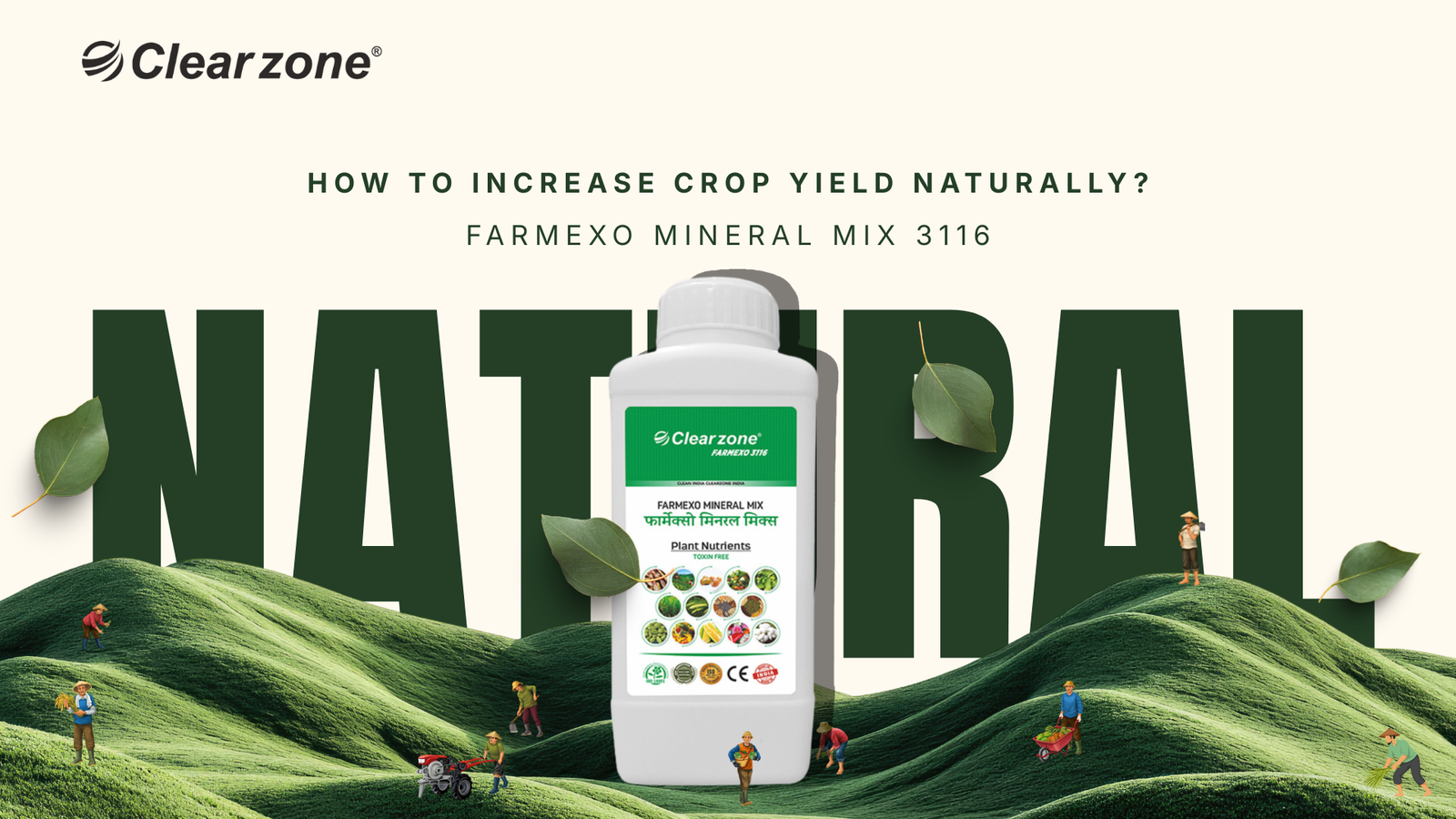
You can increase crop yield naturally by correcting soil and micronutrient deficiencies, improving foliar nutrition, and timing key growth-stage inputs like flowering and fruit-set boosters. Farmers who combine balanced nutrition with proper irrigation and pest management typically see a 20-40% improvement in yield within a single season.
Key Takeaways
- Soil testing is the first step; most yield loss traces back to hidden micronutrient deficiency, not seed quality.
- Foliar sprays deliver nutrients 5-10x faster than soil application because leaves absorb nutrients directly.
- Micronutrients like zinc, boron, and iron directly control flowering, fruit-set, and grain-fill stages.
- A natural yield booster such as FARMEXO 3116 Mineral Mix can increase yield by 20-40% when applied at the right crop stage.
- Timing matters more than quantity — applying nutrition at vegetative, flowering, and fruiting stages gives the best return.
- Natural yield increase methods are cost-effective and improve soil health long-term, unlike heavy chemical dependence.
- Consistent, low-dose foliar application outperforms one-time heavy dosing.
What Does “Increasing Crop Yield Naturally” Actually Mean?
Increasing crop yield naturally means using biological and mineral-based methods — not synthetic growth hormones — to help a crop reach its full genetic yield potential. It focuses on correcting deficiencies, improving nutrient uptake, and supporting the plant’s own growth processes. This approach works well alongside a wider range of agriculture products designed to support healthy crop cycles from sowing to harvest.
This differs from purely chemical intervention because natural methods work with the plant’s biology instead of forcing artificial growth spurts that can weaken long-term soil and plant health.
Why Is My Crop Yield Lower Than Expected?
Low crop yield is usually caused by one or more of these factors:
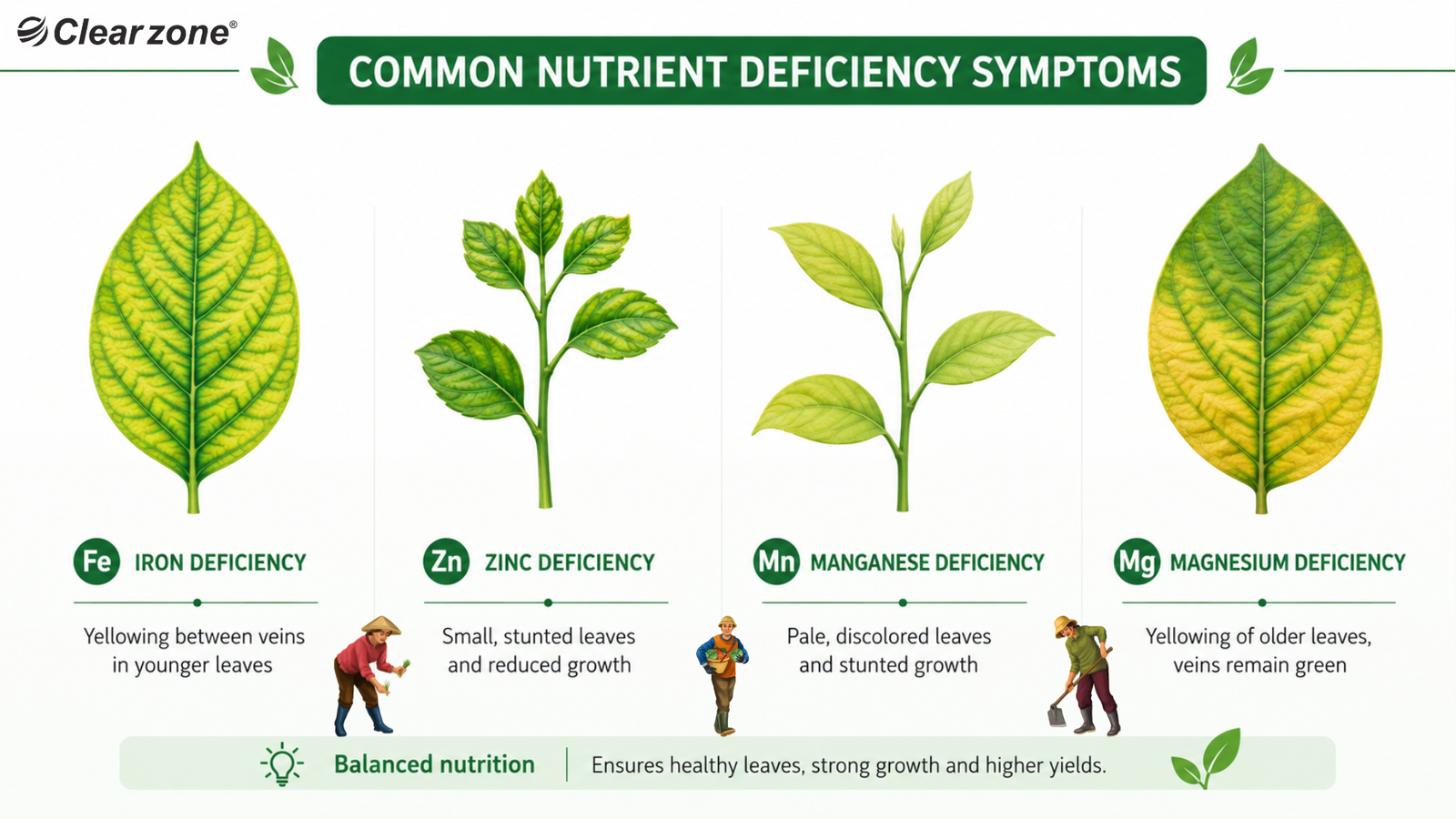
- Micronutrient deficiency — zinc, boron, manganese, or iron shortages that stunt flowering and fruit development
- Poor nutrient uptake — healthy-looking soil that still can’t deliver nutrients to the plant efficiently
- Stress during critical stages — heat, water stress, or nutrient gaps during flowering and fruit-set
- Imbalanced fertilization — too much nitrogen with too little micronutrient support
A simple way to verify this: if your crop has healthy leaf color but poor flowering or fruit size, the issue is very likely micronutrient deficiency rather than a macronutrient (NPK) problem.
Nutrient gaps are not the only cause of yield loss — pest and disease pressure can equally hold back a healthy-looking crop. If you’re managing both issues together, it also helps to protect your crops from pests and disease alongside correcting nutrition.
How Do Foliar Sprays Increase Crop Yield?
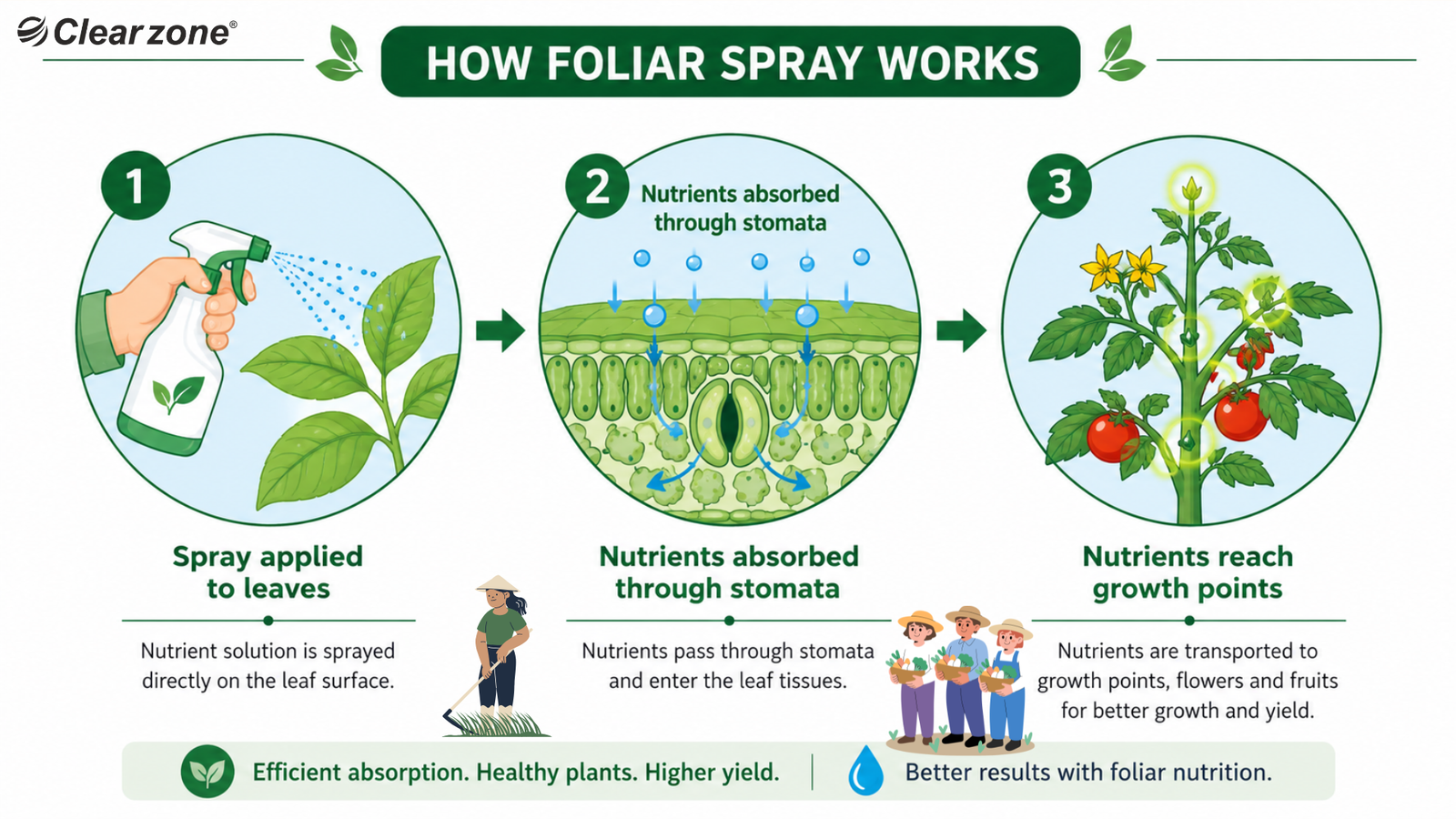
Foliar sprays increase crop yield by delivering nutrients directly through the leaf surface, bypassing slow soil absorption. This is especially useful during flowering and fruiting stages when the plant needs a fast nutrient response.
How it works, step by step:
- Nutrients are absorbed through leaf stomata within hours of application
- The plant redirects this nutrition toward active growth points — flowers, fruit, or grain
- Repeated application at 10-15 day intervals maintains steady nutrient supply through the crop cycle
Compared to soil-applied fertilizer, which can take days or weeks to reach the root zone (especially in compacted or alkaline soil), foliar feeding gives a measurable response in 3-5 days.
Which Nutrients Have the Biggest Impact on Yield?
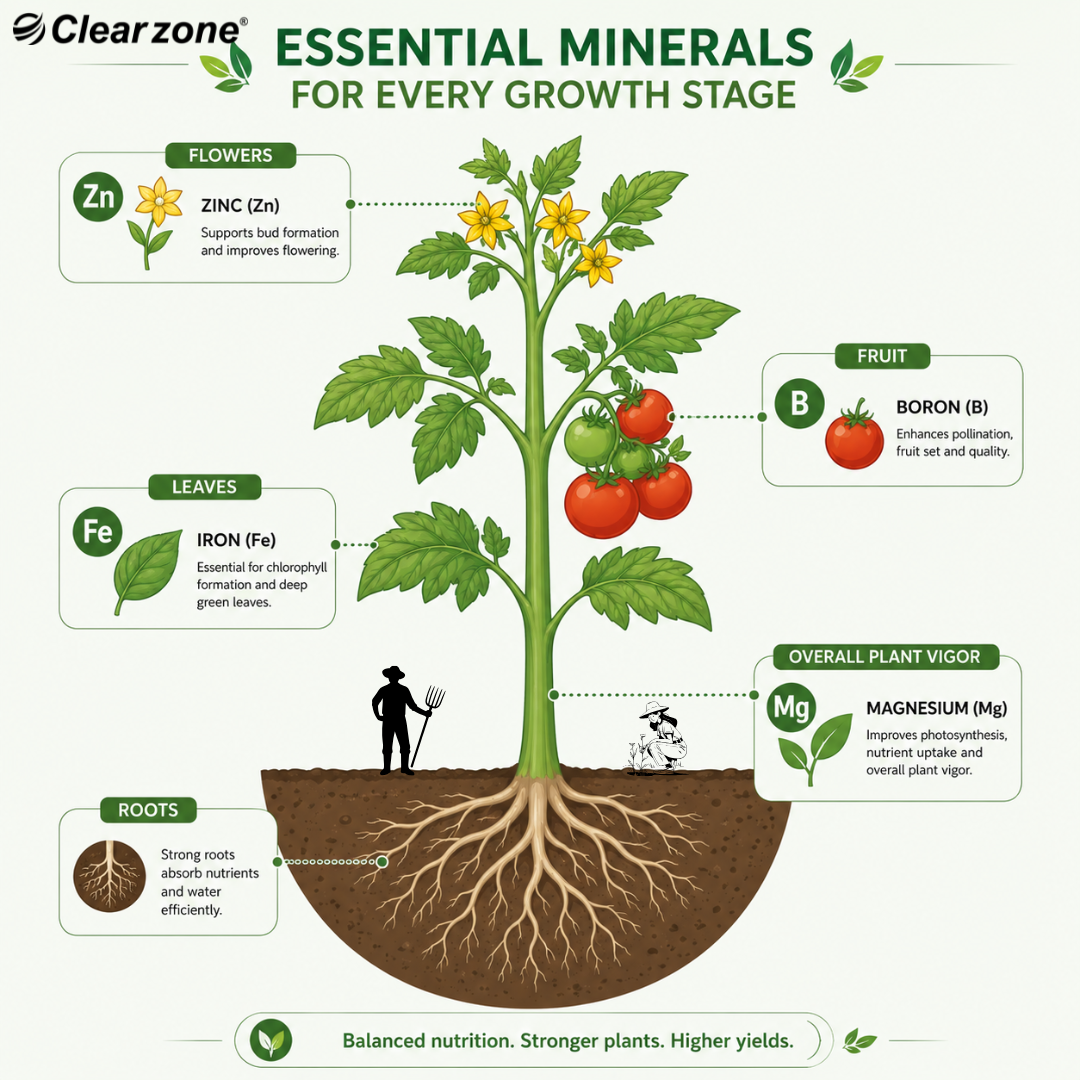
| Nutrient | Growth Stage Impact | Deficiency Symptom |
|---|---|---|
| Zinc | Flowering, fruit-set | Small leaves, poor flowering |
| Boron | Fruit-set, seed development | Fruit drop, hollow grain |
| Iron | Chlorophyll production | Yellowing between leaf veins |
| Manganese | Photosynthesis efficiency | Pale, stunted growth |
| Magnesium | Overall vigor | Older leaf yellowing |
A balanced mineral mix that includes both major and secondary micronutrients — such as FARMEXO 3116 — addresses multiple deficiencies in a single application, instead of requiring separate products for each nutrient.
How to Verify a Yield-Boosting Product Actually Works
Before trusting any growth promoter, verify these three things:
- Composition transparency — the product should clearly list which micronutrients it contains and in what form (chelated vs. non-chelated)
- Recommended dosage per crop stage — reliable products specify exact application timing (vegetative, flowering, fruiting) rather than a single generic dose
- Field-tested yield claim — look for a specific percentage range (such as 20-40%) rather than vague claims like “boosts growth”
FARMEXO 3116 meets all three criteria: it lists its full mineral composition, provides stage-wise dosage guidance, and states a specific 20-40% yield improvement range based on field application.
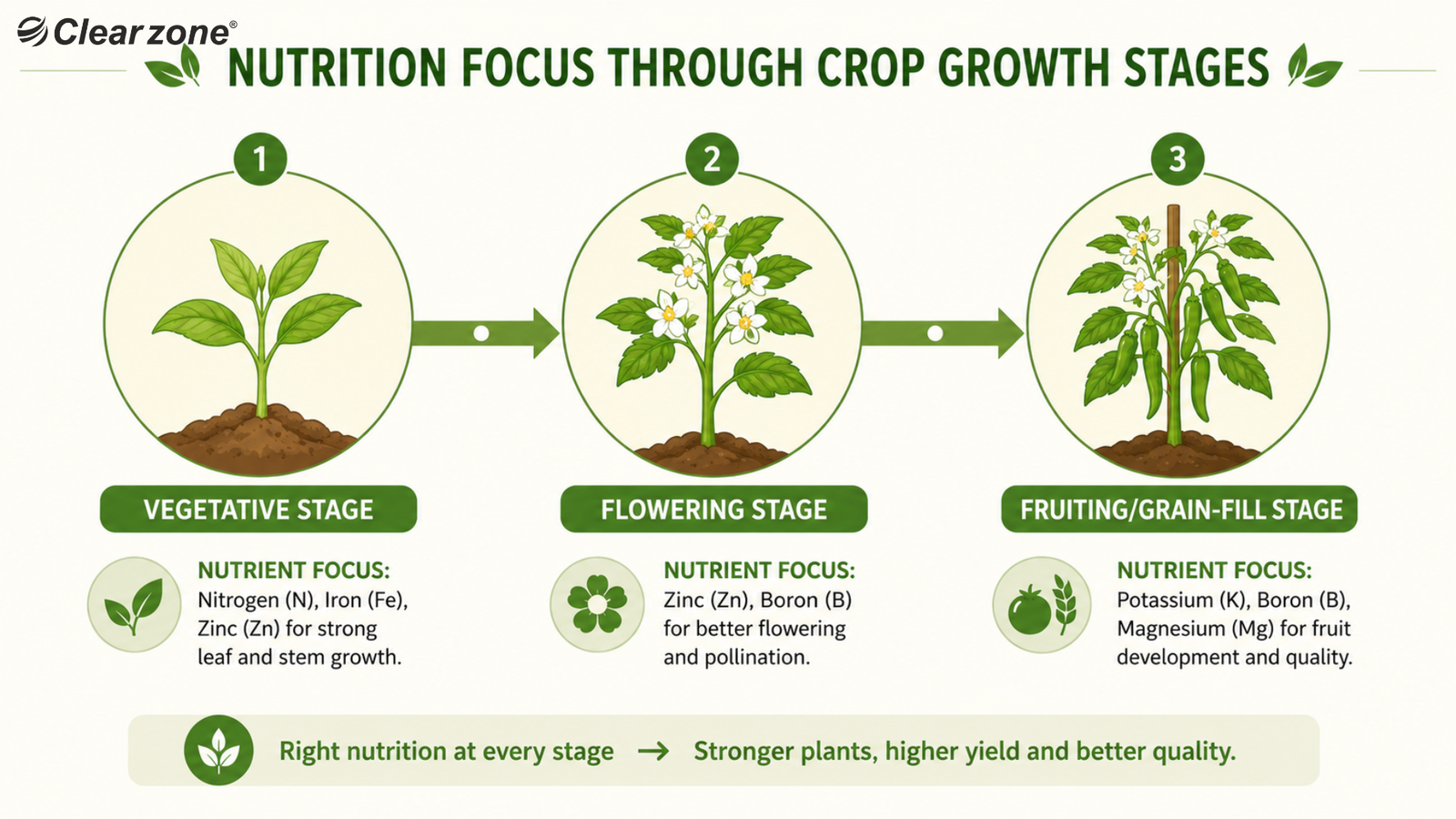
What Is the Best Natural Method to Increase Yield at Each Growth Stage?
- Vegetative stage: Focus on root and shoot development with balanced micronutrient foliar spray
- Flowering stage: Apply boron and zinc-rich nutrition to reduce flower drop
- Fruiting/Grain-fill stage: Apply potassium and calcium-supportive minerals to improve fruit size and grain weight
Applying the same product at every stage without adjusting focus is one of the most common mistakes farmers make — yield gains come from stage-specific nutrition, not blanket application.
How Much Can Natural Methods Really Increase Yield?
Field results from balanced micronutrient and foliar nutrition programs typically show a 20-40% yield increase compared to crops relying only on standard NPK fertilization. The exact number depends on soil condition, crop type, and how consistently the nutrition schedule is followed.
Frequently Asked Questions
Q: What is the fastest natural way to increase crop yield?
A: Foliar application of a balanced micronutrient mix is the fastest method, since leaves absorb nutrients within hours and show visible results in 3-5 days.
Q: Can natural yield boosters replace fertilizer completely?
A: No. Natural yield boosters like mineral mixes supplement fertilizer by correcting micronutrient gaps; they work best alongside a standard NPK program, not as a full replacement.
Q: How often should I apply a growth promoter for best results?
A: Most crops respond best to application every 10-15 days during active growth, flowering, and fruiting stages, rather than a single one-time dose.
Q: Is FARMEXO 3116 suitable for all crop types?
A: Yes, FARMEXO 3116 Mineral Mix is formulated for a broad range of crops including vegetables, fruits, cereals, and pulses, with stage-wise dosage guidance provided for each.
Q: Does natural yield improvement work for both small and large farms?
A: Yes. Since foliar application is dose-based and scalable, the same nutrition principles apply whether you’re managing a home garden or several acres of commercial cropping.
Q: Where can I buy a reliable plant growth promoter in India?
A: FARMEXO 3116 Mineral Mix is available directly from Clearzone — buy FARMEXO 3116 online.
Need Help Choosing the Right Product?
This guide is brought to you by Clearzone, committed to helping Indian farmers grow healthier crops with science-backed, natural nutrition solutions.
Explore our full range of agricultural products or reach out to our team for personalized crop advice.
If you live in Ahmedabad and your home is facing a pest infestation, contact Clearzone Pest Control, Ahmedabad’s old and trusted pest control company, right away.
Our experienced team offers safe and effective pest control solutions to keep your home pest-free.
