Farming has never been an easy job, but let’s be honest—today’s growers are dealing with a whole new level of stress. Between weather that refuses to act normal, bugs that seem immune to everything, and wild animals treating fields like open buffets overnight, getting a healthy crop to harvest feels harder than ever.
To keep harvests healthy and food on the table, we need crop protection solutions that actually work in the real world, without burning out the soil. At the same time, the focus has to be on sustainable farming solutions that protect our yields right now while keeping the land fertile for the future.
Why Crop Protection is Non-Negotiable
From the moment a seed goes into the dirt, it has a target on its back. Insects chew through stems, fungal diseases explode overnight if the humidity is right, and wild animals can clear out an entire field while you sleep. Even a minor outbreak hits where it hurts most: the bottom line.
Using reliable crop protection solutions isn’t just an “extra” step; it’s the only practical way to:
- Cut down on heartbreaking crop losses.
- Boost both the quality and size of the yield.
- Safeguard the heavy investments we make in seeds and fertilizers.
- Keep the farm profitable.
- Make sure we’re producing a stable food supply.
Without a solid defense, it’s just too easy to suffer losses that could have easily been prevented.
The Main Threats to Our Fields
You can’t fight a problem you don’t understand. Here is what is usually trying to eat into our profits:
Pest Infestations
Bugs like aphids, caterpillars, borers, and whiteflies don’t just eat the crops; they weaken them entirely. Even worse, they often act as carriers, spreading diseases from plant to plant.
Plant Diseases
Fungal, bacterial, and viral infections love the right weather conditions. Issues like root rot, mildew, blight, and leaf spot can spread incredibly fast across an entire farm.
Weed Competition
Weeds are essentially thieves. They steal the water, sunlight, and nutrients that our actual crops need to survive and thrive.
Wildlife Damage
Anyone farming near woods or open grazing land knows the sheer frustration of wild boars, nilgai, monkeys, rodents, or birds trashing a standing crop. Wildlife intrusion is one of the most unpredictable—and destructive—threats out there.
Practical Defenses That Actually Work
Relying on just one method is a recipe for disaster. The most effective crop protection solutions use an integrated approach that mixes prevention with targeted action.
- Keep Your Eyes on the Field (Regular Monitoring)
Walking your fields regularly is the best way to catch pest activity or disease symptoms early. Catching a problem before it blows up means you can fix it quickly, minimizing damage. It also saves money, ensuring treatments are only applied when absolutely necessary.
- Bring in the Good Bugs (Biological Pest Management)
A lot of us are moving toward biological control—basically, using natural predators to hunt down the pests. It cuts down on our reliance on harsh chemical pesticides and keeps the local ecosystem humming along naturally.
- Stop Diseases Before They Start
Trying to cure a sick crop is tough; preventing it is way easier. You can drastically lower disease risks by planting healthy seeds, rotating your crops, keeping the field clean, and making sure your drainage and irrigation systems are dialed in so water doesn’t pool and cause rot.
- Keep the Animals Out (Wildlife Repellents)
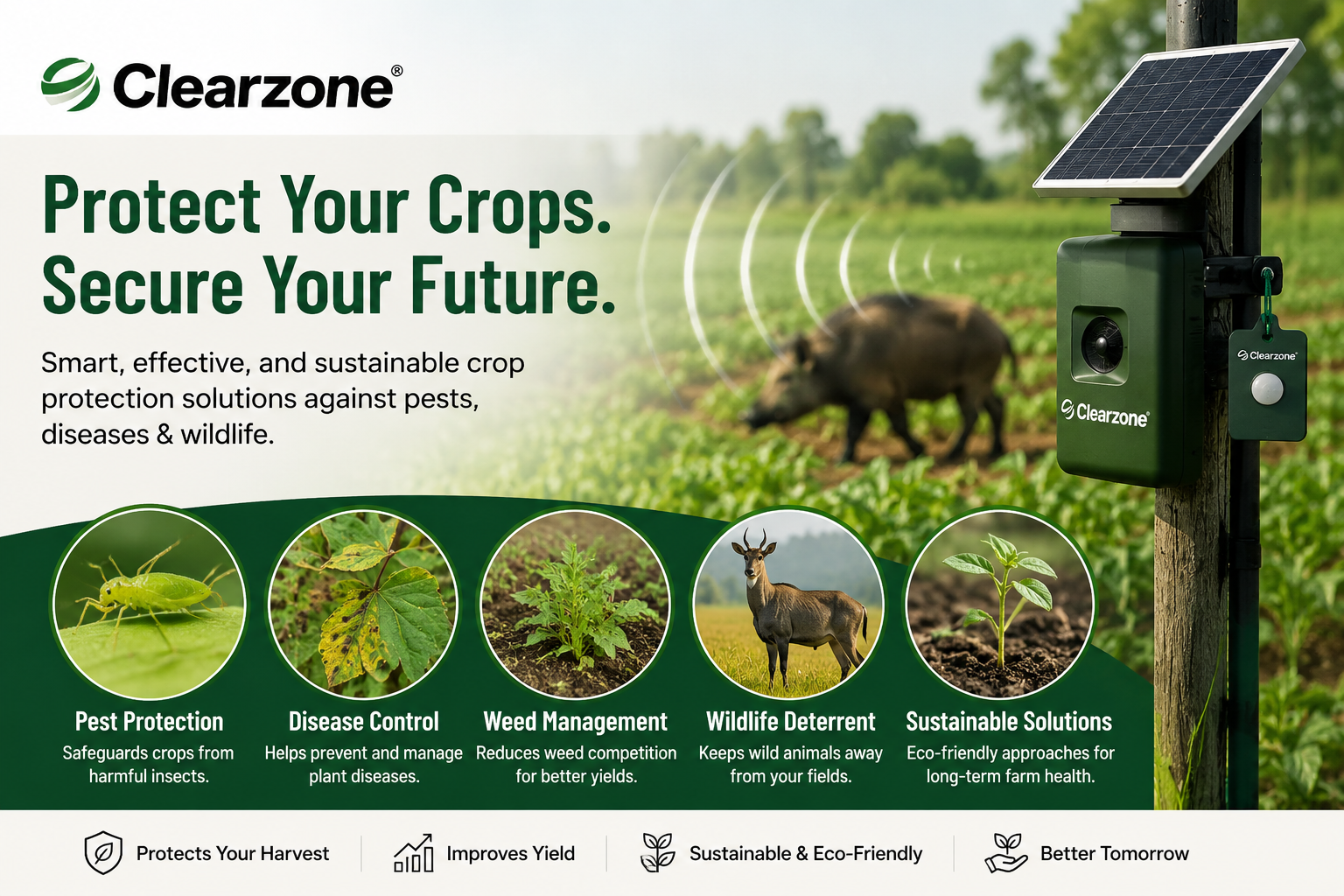
Fences are expensive and don’t always cut it. Modern repellent systems and animal deterrents are essential for keeping destructive wildlife away from the crops without actually hurting the animals. Clearzone creates practical design solutions to keep nilgai, boars, and rodents out of fields.
Sustainably Improving Yieldshttps://clearzone.in/contact-us/
Striking a balance between a high yield and a healthy environment is critical for the future of farming. Sustainable farming solutions are beneficial to that balance. Here are the approaches modern farms use:
Managing Soil Health
Nothing beats a good crop without a good field. The strongest and most natural resistant plants come from nutrient management and composting, of which strengthen and support the soil.
Integrated pest management (IPM)
IPM calls for an intelligent approach to crop management. Good field habits, monitoring, and biological controls all come together to make a good case for the use of chemical sprays as a last resort.
Managing Water with Efficiency
Keeping plant leaves dry by limiting water and using advanced irrigation methods significantly reduce the risk of fungal diseases.
Enhancing Biodiversity
Having a healthy variety of plant life around our fields attracts beneficial insects and pollinators. This contributes to a much healthier overall farm ecosystem.
Adapting to a Changing Climate
The unpredictability of weather patterns has created new obstacles for agriculture. Seasonal changes are now frequent droughts and short-lived heat waves. Rapid climate change also creates new challenges for pests and diseases. The most pressing challenge for growers is to implement changes due to the spikes in the severity and frequency of natural disasters.
Weather Resistant Methods: One of the best ways to combat the erratic patterns of nature is to plant seeds that are resistant to drought. This can be paired with changes in planting schedules to avoid the worst extremes.
Technology in farming: The advancement of farming technology to show localized soil conditions and the current weather allows us to make real-time decisions that are based on facts.
Advanced Pest Control: Rapid climate change creates unique and extreme threats to farming. One of the most critical areas of farming is choosing farming technology that is flexible and advanced to address spontaneous pest threats.
Resource Management: The greatest offense to the climate is the most inefficient farming. Smart and efficient resource management is the best response against climate impacts.
Clearzone’s Perspective
This is the type of real-world farming problem Clearzone was founded to assist with (ex. exclusion of pest species and increasing the overall health of crops). Clearzone’s practice ensures we can maintain our most vulnerable crops and our most valuable land.
The Bottom Line
Farming today means staying on the offensive. A proactive strategy is the only way to defend against pests, diseases, weeds, and wildlife. By mixing those strong defenses with smart sustainable farming solutions and actively looking for solutions for climate change in agriculture, we can make sure our land stays productive, profitable, and healthy for generations to come.Crop protection solutions help farmers prevent pest attacks, fungal diseases, and wildlife damage.
Frequently Asked Questions
What are the best crop protection solutions out there right now?
Honestly, there is no single magic spray anymore. The most effective crop protection solutions today are all about mixing it up. It means walking your fields often so you catch problems early, using good bugs to hunt the bad ones, and setting up modern deterrents for wildlife. When you combine solid prevention with targeted treatments, you actually keep your fields much safer than just relying on chemicals alone.
Will adopting sustainable farming solutions actually make me money?
Yes, and that’s usually the biggest surprise for folks. It is easy to assume that farming sustainably costs a fortune, but real sustainable farming solutions are designed to cut your overhead. When you build up your soil health and use smart irrigation, you stop burning cash on excess water, heavy fertilizers, and endless pesticide sprays. Better soil means tougher plants, fewer crop losses, and more money staying in your pocket at the end of the season.
The weather is getting crazy—what are some real solutions for climate change in agriculture?
We all know the seasons just don’t look like they used to. When it comes to practical solutions for climate change in agriculture, it is all about adapting before you are forced to. That means switching to drought-hardy seed varieties, tweaking your planting dates, and using simple technology like soil moisture sensors so you aren’t just guessing when to water. Making sure every single drop of water counts is probably the best defense you can build right now.
How do I stop nilgai, wild boars, and rodents from trashing my fields?
Waking up to a trampled field is the absolute worst. High fences cost a fortune and animals often find a way through anyway. The smartest move now is using modern repellents. Innovative crop protection solutions, like the deterrents made by Clearzone, actually convince nilgai, wild boars, and rodents to stay away from your crops. The best part? They do the job effectively without harming the animals, saving you a massive headache.
Can I actually cut back on pesticides without the bugs eating my profits?
100%. This is the whole point of using sustainable farming solutions like Integrated Pest Management (IPM). Instead of just spraying on a rigid schedule, you scout your fields, introduce natural predators, and clean up the plant debris where pests like to hide out. You keep the heavy chemical sprays in your back pocket for actual emergencies. It keeps the bug populations under control while stopping you from damaging the soil you rely on.